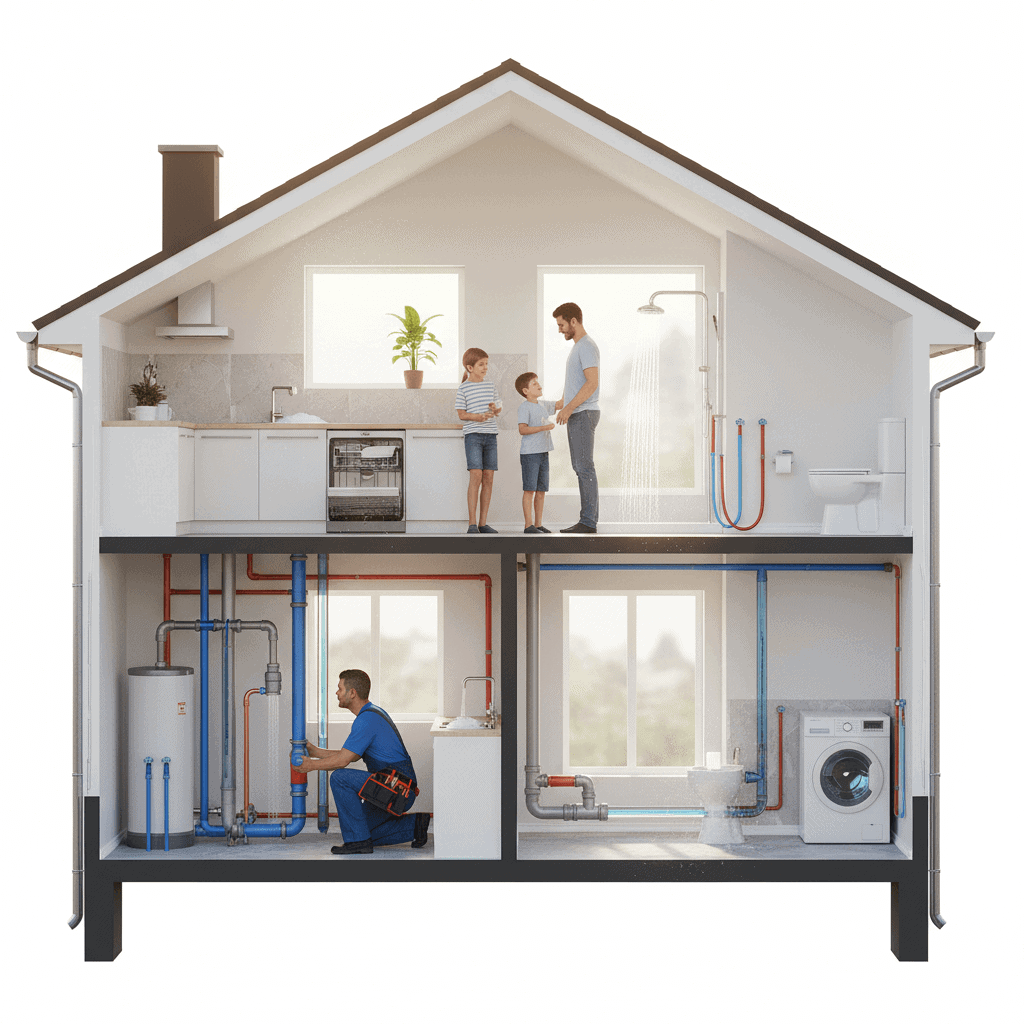
Residential Plumbing Services Overview
Residential plumbing services show homeowners what happens when a pipe drips or a water heater stops working on a chilly morning. Plumbing goes beyond fixing obvious problems. It involves regular checkups, swapping out old parts, and tips that can cut monthly water bills. People living in houses or condos get to learn about common plumbing fixes and smart advice that saves money and headaches. Knowing this can turn a plumbing mess into a simple task, making home life smoother and cheaper. Keep reading to unlock secrets that many miss but can make a big difference.
The goal is to make plumbing approachable. I will explain common repair types, outline how emergency calls are handled, list routine maintenance tasks that add years to equipment life, and describe how to choose a trustworthy company for work around your property. Concrete examples and cost ranges are included so you can make informed decisions when a situation arises.
Residential Plumbing Services Overview and What It Covers
When someone mentions residential plumbing services they usually mean diagnosis and repair of fixtures drains pipes and water heaters. Services fall into several buckets such as emergency repairs routine maintenance fixture installation and system upgrades. A typical service visit might resolve a running toilet replace a leaking faucet or locate a hidden slab leak.
Understanding the full scope prevents surprises. For instance replacing a water heater may include removing the old tank adding new venting and updating safety devices. A drain cleaning job could simply be a snaking procedure or it might require hydro jetting for heavy buildup. Each approach has different costs and expected outcomes.
Common Repairs Included in Residential Plumbing Services Overview
Homeowners most often request repairs in these categories
- Leaky pipes and joints
- Clogged sinks toilets and tubs
- Faulty water heaters both tank and tankless
- Running toilets and worn flappers
- Garbage disposal replacement and clearing
- Fixture replacement such as faucets and shower valves
- Sewer line inspection and repairs
Providing an example help clarify typical timelines. A kitchen sink clog removed by mechanical snaking often takes 30 to 60 minutes. If camera inspection reveals root intrusion in the sewer line a repair can take several hours or require excavation. Knowing the likely scope from the start helps you schedule and budget.
Emergency Response and Time Sensitive Situations
Plumbing emergencies require quick action to reduce damage. Leaks that soak floors or ceilings and complete water loss to a home count as urgent. Good service providers prioritize these calls and dispatch a technician equipped to stop the leak and limit harm right away.
What to expect during an emergency visit
A technician will typically shut off the main water supply perform a rapid assessment and apply a temporary fix such as a compression clamp or replacement section of pipe. The goal is to stabilize the situation and then outline permanent repair options. Expect clear communication about next steps and a written estimate for further work.
Tips to reduce damage before help arrives
- Locate and turn off the main shutoff valve
- Move furniture and valuables away from the affected area
- Use buckets and towels to collect water and limit spread
- Turn off electrical circuits feeding wet areas if safe to do so
Maintenance Plans and Preventive Tasks in Residential Plumbing Services Overview
Small preventive steps can add years to plumbing components. Consider an annual inspection that includes checking visible supply lines for corrosion testing water pressure and flushing a water heater to remove sediment. Sediment buildup can reduce a tank heater lifespan more than ten years in some areas with hard water.
Some contractors offer maintenance plans that bundle inspections and minor repairs at a set price. These plans often include priority scheduling for emergency calls and discounted labor for parts. If you prefer hands on care here are a few tasks you can do between professional visits
- Run water through seldom used drains monthly
- Check for slow drips at faucets and toilets
- Inspect exposed pipes for small signs of corrosion or mineral buildup
- Test the temperature pressure relief valve on water heaters annually very carefully
How Pricing Works in Residential Plumbing Services Overview
Pricing varies by region job size materials and accessibility. Many companies charge a flat service call fee to cover travel and diagnosis then bill labor by the hour plus parts. Here are common price ranges to set expectations
- Service call with minor repair under one hour 75 to 200 dollars
- Clog removal using snaking 125 to 350 dollars
- Water heater replacement 800 to 2500 dollars depending on type and capacity
- Sewer line repair can range from 1500 to 6000 dollars for excavation and replacement
Always ask whether quoted prices include permits disposal and cleanup. A clear written estimate helps avoid surprises and makes it easier to compare offers from multiple providers.
Choosing the Right Company in Residential Plumbing Services Overview
Selecting a provider is about more than low price. Look for technicians who show up on time communicate clearly and explain options for repair and replacement with pros and cons. Licensing and local reviews give a baseline level of confidence.
When you read reviews pay attention to how a company responds to negative feedback. A constructive reply that takes responsibility and offers to remedy a problem speaks well to long term customer care. A service provider that stands behind their work will provide warranties on parts and labor and supply documentation of the warranty terms.
For homeowners in Orlando and nearby neighborhoods one local option to consider is Brightwater which lists common services response times and customer feedback right on its service page. Checking local credentials and recent project photos helps set realistic expectations.
Installation Upgrades and When They Make Sense
Upgrading fixtures or systems can lower utility bills and reduce service calls. Replacing a 15 year old tank water heater with a newer high efficiency model can cut gas or electric consumption by up to 10 to 20 percent depending on use and local fuel costs. Low flow fixtures reduce water use and can lower sewer charges in some municipalities.
Deciding when to replace rather than repair depends on the age of the equipment frequency of breakdowns and comparative cost of repair. A rule of thumb is if repairs over the last two years exceed half the replacement cost then replacement is worth strong consideration.
Common Misconceptions in Residential Plumbing Services Overview
There are a few misconceptions that cause unnecessary expense. The first is that chemical drain cleaners are a universal solution. They can damage finishes and accelerate pipe corrosion when used repeatedly. Mechanical methods or professional hydro jetting are safer for thorough cleaning in many situations.
Another myth is that small leaks are harmless. Even a slow drip can waste hundreds of gallons per month and lead to hidden water damage and mold. Address small leaks quickly to avoid much larger repair bills later.
Residential plumbing covers a wide range of tasks from emergency fixes to planned replacements. Regular maintenance reduces the chance of sudden failures and helps you budget for major items. When choosing a company look for transparent pricing clear warranties and technicians who explain options in plain language. Keep a simple checklist by your main shutoff valve and perform easy monthly checks on fixtures and exposed pipes to spot problems early.
If you have a current issue start by documenting what you see take photos and note when the problem began. Contact a licensed technician for an on site assessment and a written estimate. Comparing two or three estimates helps you evaluate recommended solutions and choose a plan that fits your budget and goals. Good plumbing work protects your home and your wallet over time. Reach out to a trusted local provider for a consultation and to arrange routine inspections that keep small issues from becoming major repairs.