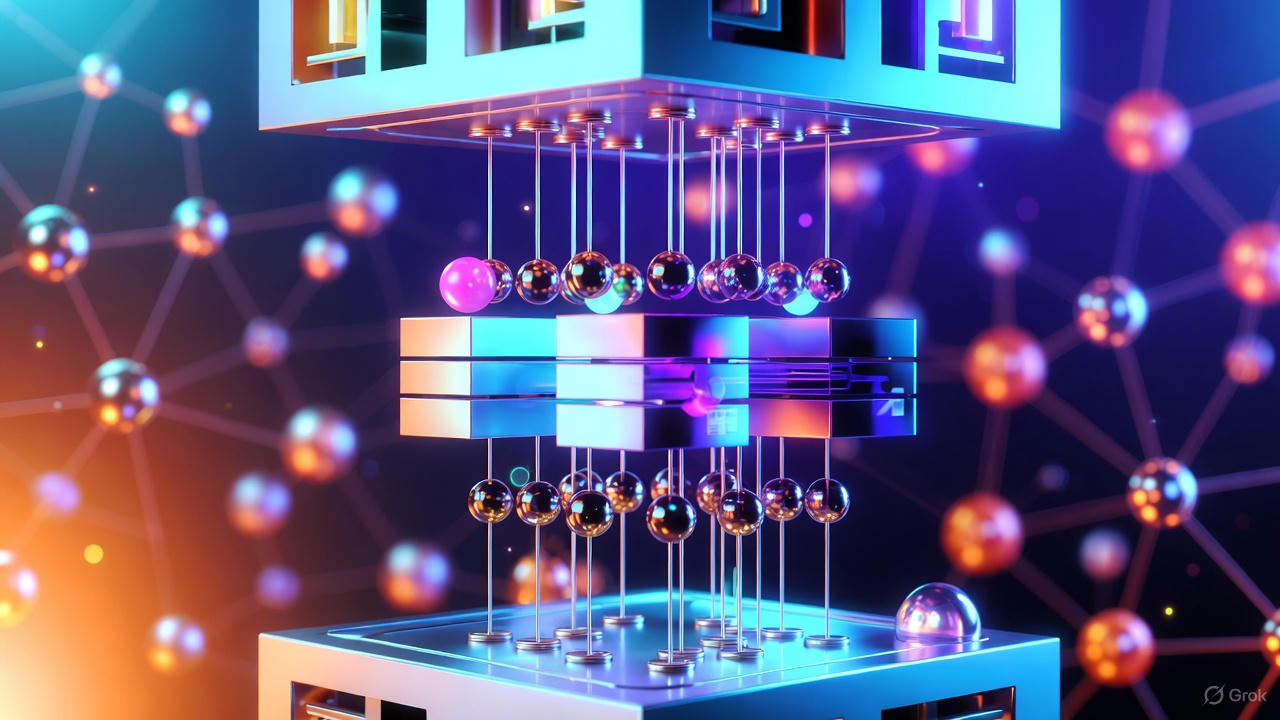
Why Quantum Computing Matters
Introduction: The Next Leap in Computing
Computers made huge breakthroughs happen, like the internet and artificial intelligence, for many years. Regular computers reached their physical limits as data grew faster than ever. Even the strongest supercomputers could not solve the toughest problems. Quantum computing arrives with a promise to change how information gets processed, unlocking incredible possibilities. This technology could transform everything, and anyone interested in the future of tech should definitely watch closely.
This article breaks down why quantum computing matters, how it works, and what it means for the future of science, business, and everyday life.
What Is Quantum Computing?
Traditional computers use bits—values of either 0 or 1. Quantum computers, however, use qubits, which can represent both 0 and 1 simultaneously through a property called superposition.
This allows quantum computers to perform calculations in parallel, exploring countless possibilities at once. Combined with entanglement, a phenomenon where qubits remain connected even across distance, quantum machines can process data in fundamentally new ways.
Why Quantum Computing Matters
Quantum computing isn’t just about speed—it’s about solving problems that are impossible for classical systems.
Drug Discovery and Healthcare
Quantum simulations can model molecular interactions at atomic precision, helping scientists design new drugs faster and more accurately. What takes years today could take hours tomorrow.
Finance and Risk Analysis
Banks and investment firms are exploring quantum algorithms to optimize portfolios, detect market anomalies, and predict risk with unprecedented precision.
Cybersecurity
Quantum computing poses both a threat and an opportunity. It could break existing encryption methods—but also lead to quantum-safe cryptography that’s virtually unbreakable.
Climate Modeling
By processing massive environmental datasets, quantum systems could simulate complex weather patterns, helping scientists better predict climate change and develop sustainable strategies.
The Global Race for Quantum Supremacy
Tech giants like Google, IBM, and Microsoft are in a race to build the first fully functional, fault-tolerant quantum computer. In 2019, Google claimed “quantum supremacy” when its prototype completed a task in 200 seconds that would take a supercomputer 10,000 years.
Since then, progress has accelerated. Governments and private investors are pouring billions into research. According to McKinsey, the global quantum technology market could exceed $90 billion by 2040, signaling enormous potential and competition.
Challenges Holding Quantum Back
Despite the excitement, quantum computing is still in its early stages. Qubits are fragile and prone to errors caused by environmental “noise.” Maintaining quantum coherence is one of the hardest technical challenges in modern science.
Researchers are developing error-correction techniques and hybrid architectures that combine quantum and classical systems. While we may be years away from consumer-ready quantum computers, industry applications are already emerging through cloud-based quantum services.
The Human Side of Quantum Computing
Beyond its scientific complexity, quantum computing represents a profound shift in how we think about information, uncertainty, and reality itself. It teaches us that multiple possibilities can exist simultaneously—and that uncertainty can be a resource, not a limitation.
This philosophical layer makes quantum technology not just a tool, but a lens through which we reimagine innovation, creativity, and problem-solving.
How Businesses Can Prepare
Forward-looking organizations are already building quantum literacy within their teams. Partnering with research institutions, investing in data infrastructure, and training staff in quantum-safe cybersecurity are becoming key strategic moves.
Those who prepare early will hold the advantage when the technology reaches maturity—much like companies that adopted the internet before it became mainstream.
Conclusion: The Quantum Future
Quantum computing matters because it redefines what’s computationally possible. It has the power to solve humanity’s toughest problems—from curing diseases to tackling climate change—while forcing us to rethink our assumptions about technology itself.
As quantum advances accelerate, the question isn’t if it will change the world, but when.